
Top Ultra Flex Welding Cable Suppliers Worldwide?
Choosing reliable Ultra Flex Welding Cable suppliers requires more than comparing prices or counting product listings. This guide examines manufacturers and distributors worldwide through practical details: fine-stranded copper construction, insulation flexibility, temperature ratings, voltage capacity, abrasion resistance, and documented compliance. A cable that bends easily beside a welding machine may still fail under repeated dragging, hot metal contact, or constant coiling. Small differences matter.
Dr. John C. Lippold, a respected welding-metallurgy specialist, has emphasized that “welding is a complex process involving heat, metallurgy, and mechanics.” That principle also applies to cable selection. The right supplier should understand how current demand, duty cycle, ambient heat, and worksite movement affect cable life. Look for clear technical datasheets, traceable testing, consistent conductor quality, and responsive engineering support. Certifications should be checked, not merely displayed in a brochure.
This overview compares prominent suppliers across North America, Europe, and Asia. It considers manufacturing capacity, customization options, delivery reliability, warranty terms, and field experience. Some suppliers appear strong on paper but provide limited evidence about long-term performance. That deserves attention. No ranking is perfect. Buyers should confirm specifications for each welding system and operating environment before placing an order. A flexible cable with a thick jacket may feel dependable in a warehouse, yet become unnecessarily heavy during all-day fabrication. Conversely, an inexpensive option can create replacement costs when its strands fatigue early. The best choice balances safety, flexibility, conductivity, availability, and verified value.
What Is Ultra Flex Welding Cable and Where Is It Used?
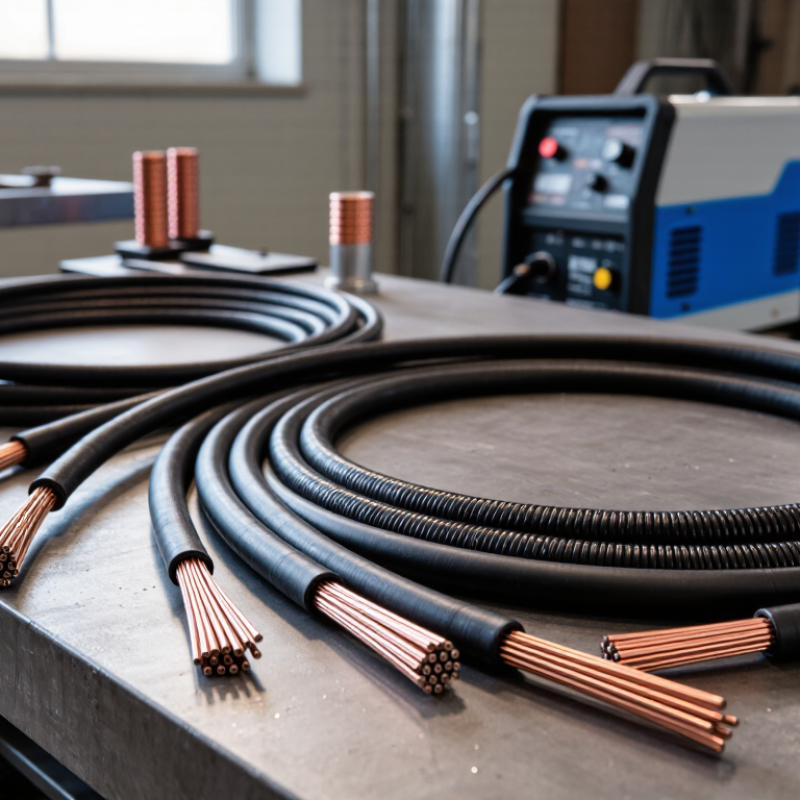
Ultra flex welding cable is a highly bendable power cable made for welding circuits. Its conductor uses many fine copper strands instead of a few thick wires. This construction lets the cable curve repeatedly without feeling stiff. A durable rubber or elastomer jacket helps resist abrasion, heat, oil, and workshop moisture. Most welding cables carry low-voltage, high-current power between a welding machine, electrode holder, and work clamp.
It is used in fabrication shops, construction sites, shipyards, vehicle repair areas, and mobile welding units. Workers often drag it across concrete floors or wrap it around equipment. Ultra flex cable reduces hand fatigue during long welding tasks. It also helps in tight spaces where standard cable bends poorly. However, flexibility does not guarantee unlimited life. Excessive heat, sharp edges, crushed sections, and poor storage can still damage it. That detail is easy to overlook.
Tips: Match the cable size to current, duty cycle, and cable length. Longer runs may require a larger conductor to limit voltage drop. Check the jacket before every shift. Look for cuts, flattened areas, exposed copper, or loose connectors. Keep cables away from hot metal and standing water. Use clean, tight connections at both ends. Some specifications vary by manufacturer and region, so confirm the datasheet before installation. Mistakes happen, especially when a cable feels strong. Don’t trust appearance alone.
| Data Dimension | Typical Industry Data | Why It Matters | Common Applications | Specification or Selection Reference |
|---|---|---|---|---|
| Product Definition | Ultra flex welding cable is a highly stranded, flexible copper power cable designed for repeated movement and welding-current transmission. | The cable can be routed around tight bends more easily than ordinary building wire or rigid power cable. | Manual welding equipment, portable welding units, fabrication areas and maintenance workshops. | Confirm the cable construction, conductor class, voltage rating and applicable national standards. |
| Conductor Material | Normally annealed copper, frequently manufactured with finely stranded or extra-flexible constructions. | Copper provides high electrical conductivity and helps limit voltage drop and resistive heating. | Welding leads, electrode holders, work-return leads and flexible industrial power connections. | Check conductor cross-sectional area, resistance per unit length and stranding class. |
| Common Conductor Sizes | Frequently selected sizes include approximately 16 mm² to 120 mm², with larger sizes available for high-current systems. | Required size depends on welding current, cable length, duty cycle, ambient temperature and installation method. | Light-duty portable welding through high-current industrial welding systems. | Use the manufacturer’s ampacity table and the relevant electrical installation code rather than size alone. |
| Voltage Rating | Many welding cables are manufactured with a nominal rating of up to 600 V, although the rating varies by construction and market. | A suitable voltage rating supports safe use in the intended electrical environment. | Low-voltage welding circuits, industrial workshops and mobile welding equipment. | Verify the printed cable marking and local approval requirements before installation. |
| Insulation and Jacket | Common materials include flexible elastomeric compounds such as EPDM, neoprene-type compounds and thermoplastic elastomers. | These materials can provide flexibility, abrasion resistance and improved resistance to oil, moisture or sunlight, depending on formulation. | Construction sites, outdoor repair work, shipyards, fabrication shops and industrial maintenance. | Review oil resistance, flame performance, ozone resistance, UV resistance and chemical compatibility. |
| Temperature Performance | Typical continuous operating limits are often around 90°C, while exact limits depend on the insulation system and certification. | Temperature limits help prevent insulation damage and premature aging during high-current operation. | High-load welding cycles, warm workshops and applications near heat sources. | Do not exceed the marked temperature rating; also account for ambient temperature and bundled cables. |
| Flexibility | Extra-fine stranding and flexible insulation allow repeated bending, coiling and repositioning. | Greater flexibility reduces handling effort and can lower the risk of conductor fatigue during normal movement. | Robotic or semi-automatic welding, portable welding leads and frequently repositioned equipment. | Ask for minimum bend radius, flex-life test information and the stated stranding construction. |
| Current Capacity | Allowable welding current is application-specific and may range from below 100 A to several hundred amperes. | Welding cables commonly operate intermittently, so duty cycle is as important as the conductor size. | Stick welding, gas-shielded welding, flux-cored welding and high-current industrial welding. | Calculate using current, total circuit length, duty cycle, ambient conditions and allowable voltage drop. |
| Duty Cycle | Common welding equipment duty-cycle references include 20%, 40%, 60% and 100% operating periods over a ten-minute cycle. | A cable suitable for intermittent welding may require a larger size when used continuously at high current. | Production welding lines, repair operations and high-output welding power sources. | Match cable selection with the welding machine rating and the actual operating schedule. |
| Mechanical Protection | Heavy-duty jackets may offer resistance to abrasion, cuts, sunlight, moisture and occasional contact with hot surfaces. | Protection is important where cables are dragged across floors or exposed to tools, metal edges and workshop traffic. | Shipbuilding, steel fabrication, construction, mining and outdoor maintenance. | Use cable ramps, guards or elevated routing where crushing, sharp edges or vehicle traffic are present. |
| Typical Global Supply Regions | Major manufacturing and distribution activity is found across North America, Europe, East Asia, South Asia and other industrial cable-producing regions. | Regional availability affects lead time, compliance documentation, customization and shipping cost. | International procurement, OEM equipment production and replacement-cable distribution. | Evaluate certifications, test reports, traceability, minimum order quantity and delivery capability. |
| Supplier Evaluation Criteria | Important criteria include conductor resistance, flexibility, jacket performance, dimensional consistency, certification and delivery reliability. | A lower purchase price does not necessarily indicate lower total cost if the cable has poor flex life or inconsistent electrical performance. | Industrial purchasing, welding-equipment assembly and long-term maintenance programs. | Request technical datasheets, batch test records, compliance declarations and sample approvals. |
| Relevant Standards | Depending on the market, products may reference standards or requirements from organizations such as ASTM, ICEA, UL, CSA, IEC or applicable national authorities. | Standards provide a basis for assessing construction, electrical performance, temperature rating and safety. | Domestic and international industrial cable projects. | Confirm that the claimed standard applies to the complete cable type and the destination country. |
| Recommended Inspection Points | Inspect jacket markings, conductor size, surface damage, connector condition, exposed strands and signs of overheating. | Regular inspection helps identify insulation breakdown, loose connections and excessive heating before failure occurs. | Workshops, construction sites, fabrication plants and mobile welding fleets. | Replace cables with severe cuts, crushed sections, exposed conductors, melted insulation or damaged terminals. |
Related Posts
-

Top Tips for Choosing the Best Welding Cable for Your Projects
-
2025 Top 5 Welding Cable Products: Elevate Your Welding Game with These Must-Haves
-
Solutions for Sourcing the Best Automotive Wire for Your Global Supply Chain
-
Understanding the Challenges in Choosing the Right Battery Connectors
-
How to Choose the Right Low Voltage Wire for Your Electrical Projects
-
Best Battery Cable Connectors for Efficient Power Transfer?