2026 Top Power Cord Extension Types You Need to Know?
In 2026, understanding various types of power cord extensions is vital. As households and businesses expand their electronic use, the demand for reliable power solutions increases. According to industry reports, the global power cord market is projected to reach $29.45 billion by 2026, driven by technological advancements and consumer needs.
Power cord extensions are essential in providing flexibility and accessibility to power outlets. They allow users to connect multiple devices in different locations. However, not all power cord extensions are created equal. An improper choice can lead to hazards such as overheating and electrical fires. Recent studies indicate that faulty extensions contribute to several incidents each year, prompting a need for consumer education and awareness.
Choosing the right power cord extension involves careful consideration of factors like length, wattage capacity, and safety ratings. Many consumers overlook these aspects and end up dissatisfied. The industry must focus on transparency and guidance to ensure safe usage. This conversation about power cord extension types is vital for both safety and efficiency in our increasingly connected lives.
Top Power Cord Extension Types: An Overview
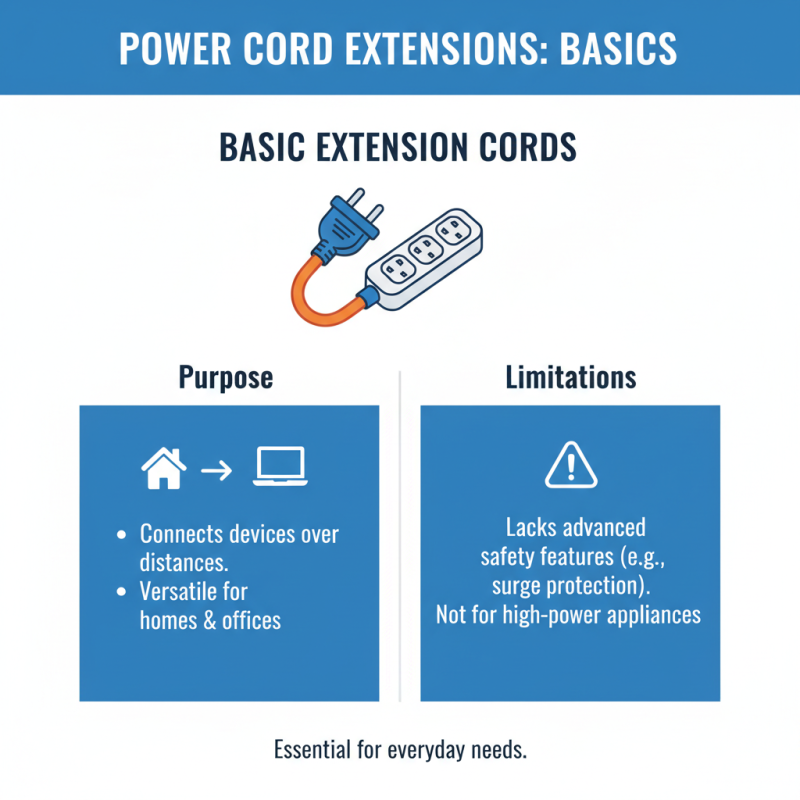
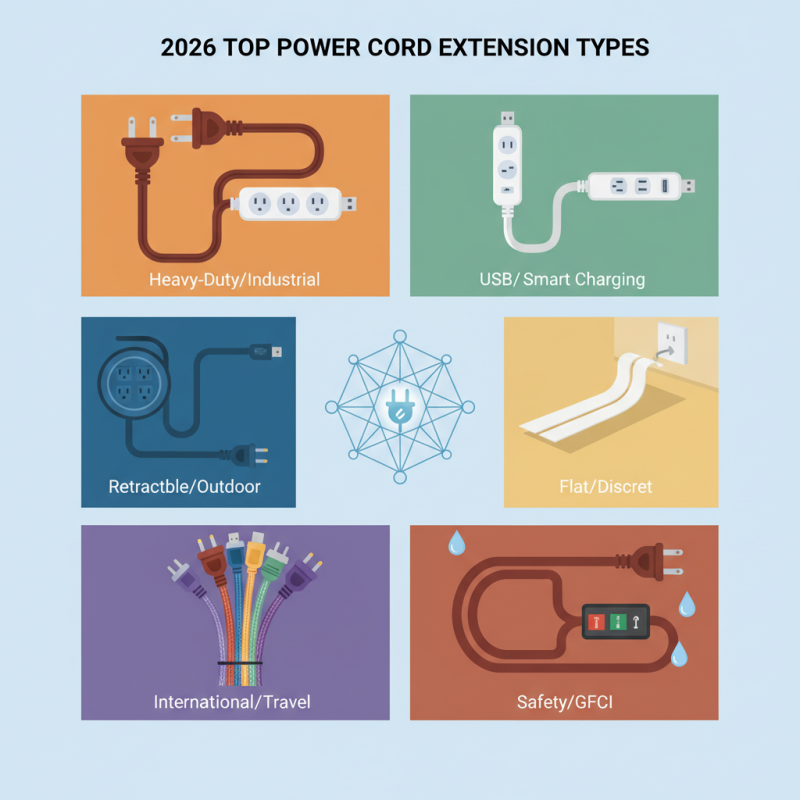
When it comes to power cord extensions, several types are essential for different setups. Each type serves a unique purpose. For instance, the basic extension cord is widely used in homes. It connects devices from a distance, making it versatile for everyday needs. However, they may lack safety features.
Another popular type is the heavy-duty extension cord. These are designed to handle higher power loads. They are perfect for tools and appliances that require more energy. Yet, many users overlook the importance of proper usage. Overloading can lead to dangers like overheating.
Cord reels are also noteworthy. They help manage long cords efficiently. Users can easily retract the cord when finished. This prevents tangles and potential damages. Nonetheless, the quality of the reel often varies. Some might break under stress, raising questions about durability. Knowing the right type for your needs can enhance both safety and functionality.
Applications of Different Power Cord Extensions
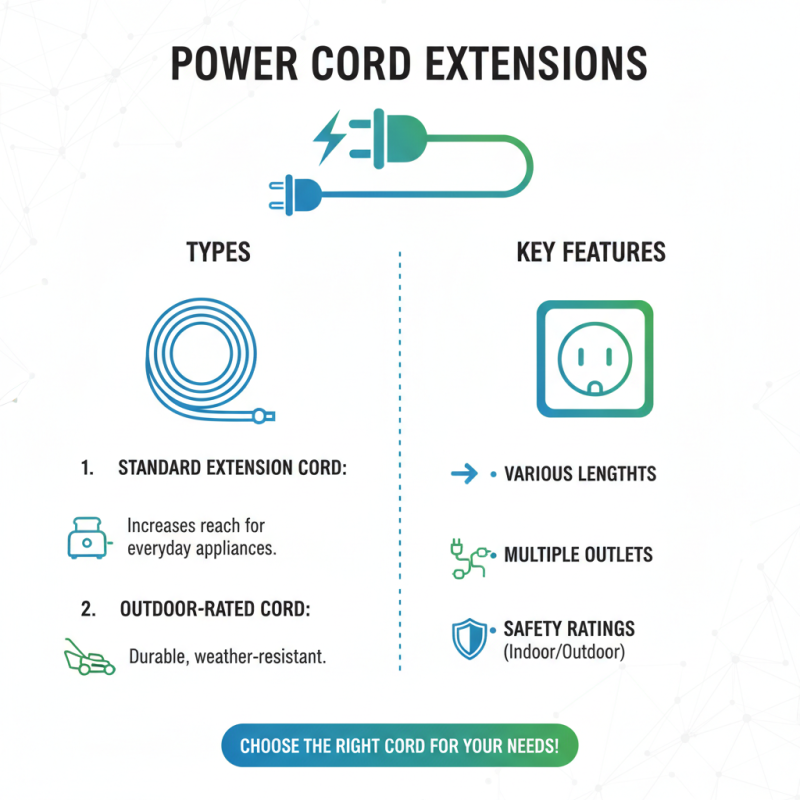
Power cord extensions come in various types, each serving unique applications. For instance, indoor extension cords are common in homes. They are ideal for powering devices like lamps, printers, and holiday lights. Users often underestimate the importance of choosing the right type. Using an outdoor extension cord indoors can lead to safety hazards. Additionally, the length of an extension cord matters. Longer cords may lead to energy loss.
Outdoor extension cords are designed for external use. They are weather-resistant and more durable. These cords power tools, outdoor lighting, and landscaping equipment. However, some users may overlook their specific ratings. It is crucial to match the cord's capacity with the power requirements of each device. Failure to do so can result in overheating.
Specialty extension cords are also available. Surge protector extensions safeguard electronics from power surges. Users must consider their devices' needs. The wrong choice could lead to malfunction. A careful evaluation of plugs and voltage ratings is essential. Reflecting on these details can prevent potential issues and enhance safety.
Safety Considerations for Using Power Cord Extensions
When using power cord extensions, safety should always come first. A common mistake is overloading the extension cord. This can lead to overheating and possibly fire hazards. Check the wattage rating of your extension cord. Ensure your devices do not exceed this limit. It's crucial to be aware of the total load. Many people forget to calculate the combined wattage of their appliances. This is a trap that could have serious consequences.
Maintaining your cords is just as important. Inspect them regularly for damage or wear. A frayed cord or exposed wires can increase the risk of electric shock. Store cords in a dry place. Avoid placing them where they can be pinched or stepped on. These small precautionary measures can make a difference. Additionally, using extension cords for long-term solutions is not recommended. They are meant for temporary use. You might find convenience in their flexibility, but this can lead to neglecting proper electrical safety.
Lastly, be cautious of using multiple extension cords together. Daisy-chaining cords creates a recipe for disaster. It increases the chance of overheating and device failure. If you notice any unusual smell or warmth from a cord, unplug it immediately. These warning signs indicate a problem. Listen to these signals to protect yourself and your home.
How to Choose the Right Power Cord Extension for Your Needs
Choosing the right power cord extension is vital for safety and efficiency. Consider the length you need. A longer cord can create more resistance. This may lead to energy loss. In contrast, a shorter cord may be too restrictive. Understand the environment as well. Indoor use typically requires less robust cords. Ensure outdoor extensions are rated for wet conditions.
Look at the amperage and voltage ratings. Not every cord can handle high wattage. Check your devices to avoid issues. Also, pay attention to the plug type. Different appliances may require specific configurations. Make sure they match your needs.
Think of the materials used. Some cords are made with durable plastic, while others use rubber. This affects flexibility and longevity. Check for certifications to ensure safety. A missing certification can lead to unexpected risks. Always reflect on your previous choices. Did the last extension cable meet your needs? Being aware can enhance your next purchase decision.
2026 Top Power Cord Extension Types You Need to Know