How to Choose Low Voltage Cable for Your Project Needs?
Choosing the right Low Voltage Cable for a project can be daunting. Experts in the industry emphasize its importance. Jane Mitchell, a renowned electrical engineer, states, “Selecting the proper Low Voltage Cable ensures safety and efficiency.” Her words resonate with many in the field.
Understanding your project needs is essential. The diversity in Low Voltage Cable types can be overwhelming. Each type serves a specific purpose, and knowing which one to choose can impact your project's success. Consider factors like the installation environment, current load, and length of the cable run.
Selecting the best Low Voltage Cable requires careful thought. Not every cable suits every project. Mistakes can lead to failures and increased costs. Awareness of common pitfalls is crucial. Focused decisions will enhance your project's reliability, ensuring you meet your goals efficiently.
Understanding Low Voltage Cable Types and Their Applications
Low voltage cables come in various types, each serving distinct purposes across different projects. For example, in residential applications, bell wire or thermostat wire is commonly used for alarms, doorbells, and home automation systems. In commercial settings, data cables, such as Cat5e and Cat6, are essential for network installations. The choice of cable impacts performance and efficiency, critical aspects to consider when planning a project.
Understanding the specifications of low voltage cables is vital. According to industry standards, cables are typically categorized by their voltage rating and insulation type. Some cables are rated for 300V, suitable for low voltage lighting systems. Meanwhile, a cable's gauge is also important. Thinner gauges may not support higher currents and can lead to overheating. A recent report indicates that selecting the appropriate cable gauge can maintain optimal performance over distances. Often, undersized cables result in unnecessary voltage drop and affect equipment functioning, posing potential risks.
Project requirements can vary widely, necessitating a tailored approach. Often, project managers choose generic types, overlooking specific needs. This may lead to inefficiencies or project delays. A clear understanding of cable applications prevents these pitfalls, ensuring that safety and performance standards are met. It is essential to analyze each project's unique demands before making cable selections.
Low Voltage Cable Types and Their Applications
Identifying Project Requirements for Low Voltage Cable Selection
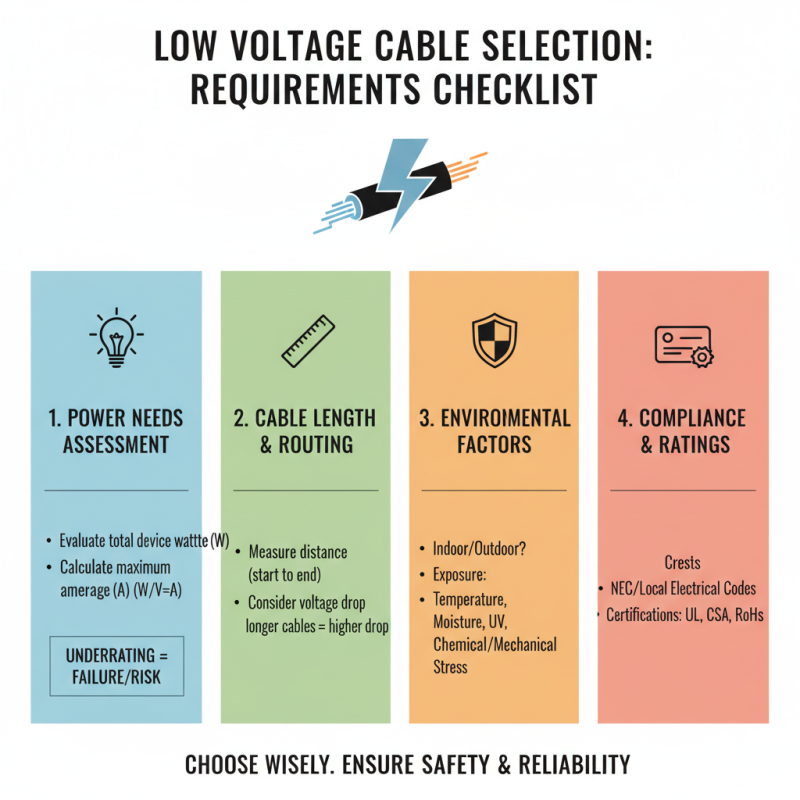
Choosing the right low voltage cable for your project demands careful consideration of specific requirements. Start by evaluating the power needs of your devices. Determine the total wattage to ensure the cable can handle the load without overheating. According to industry data, underestimating load capacity can lead to cable failure and safety issues.
Next, consider the installation environment. Factors like temperature, exposure to moisture, and potential physical damage all influence cable selection. For instance, a report from the National Electrical Manufacturers Association indicates that improper insulation can compromise performance in humid conditions.
Tips: Always check for local building codes regarding low voltage installations. Ensure your cables are rated for any environmental conditions they might face. Additionally, think about future expansion. It can be costly to replace cables later if you outgrow your initial installation.
Finally, examine the cable length. Longer distances can result in voltage drop, affecting performance. Ensure your cable choice accommodates any potential voltage loss. In essence, meticulous planning will lead to a more reliable and efficient low voltage system.
Evaluating Cable Specifications: Voltage, Amperage, and Material
When selecting low voltage cables, understanding specifications is critical. Voltage ratings indicate the maximum power the cable can handle. A common rating for low voltage cables is 600 volts. This rating is essential for safety and performance. Ensure compatibility with your project requirements to avoid potential failures.
Amperage, or current capacity, also plays a crucial role. It denotes how much electrical current the cable can safely carry. For instance, a 16-gauge wire typically supports 13 amps, making it suitable for specific applications. This highlights the importance of calculating load requirements before making a choice.
Cable materials should not be overlooked. Copper and aluminum are common conductors. Copper has better conductivity, but it often comes at a higher cost. A report by the International Electrotechnical Commission notes that aluminum cables can weigh up to 50% less than their copper counterparts. Such factors influence installation and long-term performance. It's essential to weigh the benefits against the costs while ensuring compliance with local regulations. Choosing wisely can prevent costly errors down the line.
Considering Installation Environment and Safety Standards
When choosing low voltage cables, the installation environment and safety standards are critical considerations. Factors such as humidity, temperature, and exposure to chemicals can greatly influence cable performance. According to a report by the International Electrotechnical Commission (IEC), environmental conditions can reduce a cable’s lifespan by up to 30%. Thus, it’s crucial to assess your project's specific environment before making any decisions.
Safety standards also play a vital role in selecting the appropriate cable. The National Electrical Code (NEC) provides guidelines on how to safely install and use low voltage cables. Understanding these standards is essential for ensuring both compliance and safety during installation. For example, using cables with proper insulation ratings can protect against electrical shock and fire hazards. A study by the National Fire Protection Association (NFPA) indicates that improper installation can lead to over 1,300 electrical fires annually.
It's important to remain aware of common mistakes when choosing low voltage cables. Overlooking the impact of the installation environment can lead to premature failures. Additionally, failing to adhere to safety standards can expose systems to significant risks. Regularly reviewing both environmental conditions and safety requirements can foster a more effective and secure installation.
Comparing Costs and Vendors for Low Voltage Cable Options
When selecting low voltage cable for your project, comparing costs and vendors is crucial. Various factors affect price, including cable materials and quality. Copper cables are often more expensive than aluminum but offer better conductivity. Additionally, insulation types impact durability and resistance to environmental conditions, affecting both стоимость и longevity.
It’s important to research vendors thoroughly. Not all suppliers offer the same quality or pricing structure. Some may provide competitive rates but compromise on material quality. Read customer reviews and ask for samples to evaluate. Transparency regarding sourcing and manufacturing processes indicates reliability.
Consider the total cost of ownership. Cheaper cables may lead to higher maintenance and replacement costs over time. Therefore, balance initial expenditures with long-term performance. A well-chosen vendor ensures that you invest wisely and avoid costly pitfalls. Making informed decisions will reflect the project's success, enhancing your credibility in the field.
How to Choose Low Voltage Cable for Your Project Needs? - Comparing Costs and Vendors for Low Voltage Cable Options
| Cable Type |
Voltage Rating |
Conductor Material |
Cost per Foot ($) |
Max Length (Feet) |
Common Applications |
| CAT6 |
300V |
Copper |
0.25 |
328 |
Data Networking |
| THHN |
600V |
Copper |
0.15 |
1000 |
Residential Wiring |
| Speaker Wire |
300V |
Copper |
0.20 |
500 |
Audio Systems |
| Low Voltage Landscape Lighting |
12-24V |
Copper |
0.18 |
150 |
Garden and Patio Lighting |
| Alarm Cable |
300V |
Copper |
0.24 |
500 |
Security Systems |