How to Choose the Best Flexible Rubber Foam Insulation Pipe?
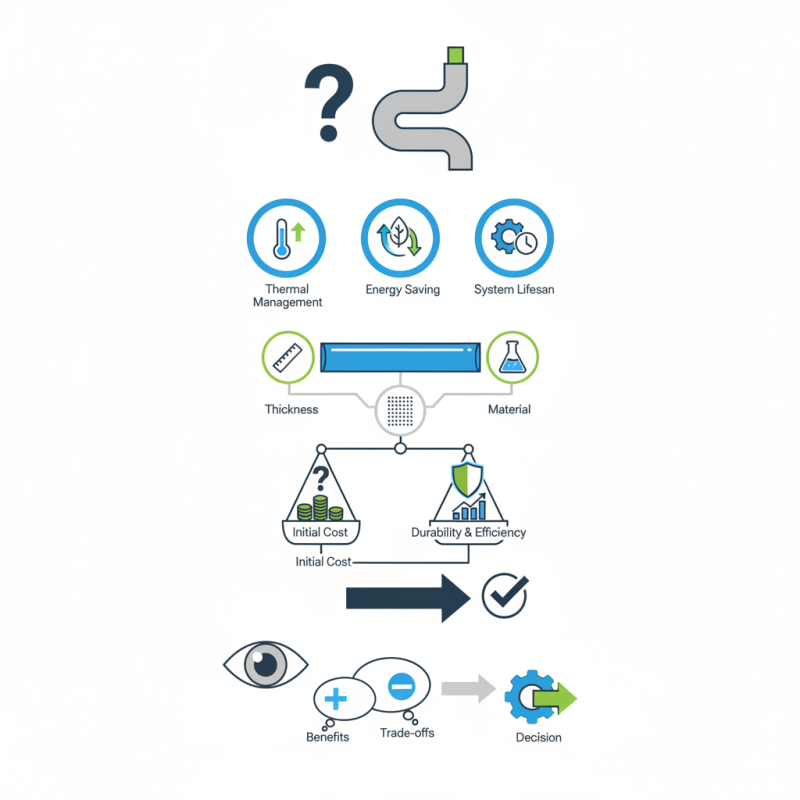
When it comes to effective thermal management, choosing the right Flexible Rubber Foam Insulation Pipe is essential. Industry expert Dr. Emily Chen states, "The right insulation not only saves energy but also prolongs the lifespan of systems." This highlights the importance of making an informed choice.
Flexible Rubber Foam Insulation Pipes are known for their versatility and efficiency. They play a crucial role in preventing heat loss and condensation. Selecting the best option requires understanding the specific needs of your application. Many options exist, but identifying the right thickness, density, and material is vital.
While many may focus solely on cost, quality should not be compromised. An inferior product can lead to higher energy expenses in the long run. It's essential to weigh the benefits of durability against upfront costs. Ultimately, making a choice demands careful consideration and awareness of potential trade-offs.
Understanding Flexible Rubber Foam Insulation and Its Benefits
Flexible rubber foam insulation has become a choice material in various applications. This type of insulation is known for its excellent thermal performance and sound attenuation properties. According to reports, it can reduce heat transfer by up to 90%. This efficiency leads to significant energy savings in both commercial and residential settings.
One of the notable benefits is its flexibility, allowing for easy installation around pipes and ducts. This adaptability minimizes the risk of air leaks, which is essential for maintaining the intended temperature of the systems being insulated. Moreover, flexible rubber foam insulation is resistant to moisture and mold, ensuring a healthier environment. However, this material requires proper sealing at joints to maximize its performance.
While the advantages are clear, some issues merit consideration. Durability can be a concern in harsh environments, potentially reducing the lifespan of the insulation. It is also essential to evaluate the thickness needed, as insufficient coverage might result in inadequate protection. Balancing these factors can help achieve the best performance from flexible rubber foam insulation.
Key Factors to Consider When Choosing Insulation Thickness
When selecting insulation thickness for flexible rubber foam, one must prioritize energy efficiency. According to the U.S. Department of Energy, insulation can reduce energy losses by up to 30%. Thus, the thickness directly impacts the thermal resistance, or R-value, which measures insulation effectiveness. More substantial insulation provides better temperature control, but too much can lead to diminishing returns and increased costs.
The choice of thickness also depends on the application. For industrial settings, where temperatures can vary significantly, a thicker insulation might be necessary. A study from the National Insulation Association indicates that adding just an inch of insulation can cut energy costs by up to 20%. However, installing too much insulation in areas with space constraints might hinder system efficiency.
Moreover, consider the surrounding environment when choosing thickness. Humidity levels can affect insulation performance. In high-humidity areas, a thinner layer could be more effective. Industry experts suggest evaluating both climate and application type to determine the optimal thickness—balancing cost-effectiveness with efficiency is crucial.
Comparison of Insulation Thickness for Flexible Rubber Foam
This chart illustrates the thermal conductivity of flexible rubber foam insulation at various thicknesses. A lower value indicates better insulation performance, helping you make a more informed decision when selecting insulation for your needs.
Evaluating Different Types of Flexible Rubber Foam Insulation
When selecting flexible rubber foam insulation, it's essential to evaluate different types available. Each type offers unique thermal properties. Some provide better insulation value, while others are more suitable for specific applications.
One important factor to consider is thickness. Thicker insulation generally provides better thermal resistance. However, it may not fit well in tight spaces. Additionally, open-cell and closed-cell variations have different moisture resistance levels. Closed-cell often performs better in humid environments.
Another aspect is flexibility. Some products bend easily, making them ideal for complex piping systems. Others are more rigid, which might limit installation options. It’s crucial to assess the installation area before deciding. Think about both performance and practicality to find the right fit.
Assessing Environmental Impact and Sustainability of Insulation Materials
When choosing flexible rubber foam insulation pipe, sustainability is crucial. Many insulation materials, including rubber foam, have environmental impacts. Their production often requires significant energy and resources. This raises questions about their long-term sustainability. The recycling aspect is also a concern. Not all rubber foams can be recycled effectively. This leads to increased waste.
Evaluating the life cycle of insulation materials offers insights into their environmental impact. Consider factors like energy consumption, emissions during production, and end-of-life disposal. Certifications like LEED can guide consumers towards more sustainable choices. However, not all eco-friendly certifications are equal. Some may not reflect true sustainability.
Furthermore, efficiency in insulation plays a role in reducing environmental impact. Good insulation minimizes energy loss, leading to lower heating and cooling needs. This directly impacts energy use and carbon footprints. Still, the balance between performance and sustainability can be difficult to achieve. Navigating this choice requires careful consideration of both immediate benefits and long-term effects.
Cost vs. Performance: Making the Right Investment in Insulation
When investing in flexible rubber foam insulation pipes, balancing cost and performance is crucial. High-quality insulation can save you money in the long run by reducing energy costs. However, cheaper options might compromise efficiency and durability. Evaluating the long-term benefits and drawbacks is vital before making a decision.
Tips: Always check the thermal conductivity of the insulation material. Lower values mean better efficiency. Look for certifications that attest to the product's credibility. Consider the installation process as well; complex installations can lead to additional hidden costs.
While a lower price tag may be tempting, it often comes with hidden costs. Insulation that degrades quickly can lead to increased energy bills over time. Research and compare different options to avoid this pitfall. Think about the specific environment where the insulation will be used. Not all products are suited for extreme temperatures or high moisture areas. These details can impact the overall performance significantly.